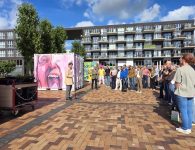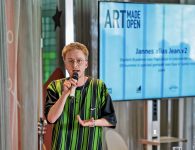
In the ART Made OPEN exhibition, you will experience how changes in your mental state affect how you think, feel and live. In this exhibition, the Open Mind Foundation and the MADE-Life Foundation bring art together across four phases of mental health:
Phase 1: Overwhelmed by mental change
Phase 2: Seeking mental stability
Phase 3: Perspective on mental health
Phase 4: Mentally strong together
Mental health is not a fixed state, but something that is constantly evolving. The four containers, each representing a distinct phase, together form a broader perspective on mental wellbeing. The containers are not arranged in a fixed order and can also be viewed independently of one another. Phases can overlap, repeat themselves and feel different for everyone.
These containers have been transformed into works of art and installations, created by art students and based on personal feelings and the stories of experiential experts. During the creative process, the students were guided by a curatorial committee consisting of an artist, a healthcare professional, an experiential expert.
Step into the world of mental health and experience what goes on inside someone’s head.
PHASE 1 | OVERWHELMED BY MENTAL CHANGE
In the phase “Overwhelmed by mental change,” you notice that you’re losing control and that you no longer have a grip on things. Inside, you feel confused. You start to think about who you are and what has happened to you. Your head feels foggy, and it’s as if you’re losing yourself a little The works in this container depict this experience. From a body that feels heavy to a wall in your head or thoughts that keep repeating themselves. You see how someone can appear strong on the outside, while it feels very different on the inside.
ARTEZ UNIVERSITY OF THE ARTS
In this container, you are in the phase titled “Overwhelmed by Mental Change.” Eight students from ArtEZ University of the Arts in Arnhem have each created their own work. In these pieces, they have personally depicted what it feels like to lose control and lose sight of the bigger picture. Created by: Murron Janzen, Imko Verhoef, Hannah Biesaart, Geriëtte Willemsen, Ricardo Koppejan, Lieke van Dongeren (studio.wanderfall), Letecia Grotens, Lieze Marieze Tazelaar
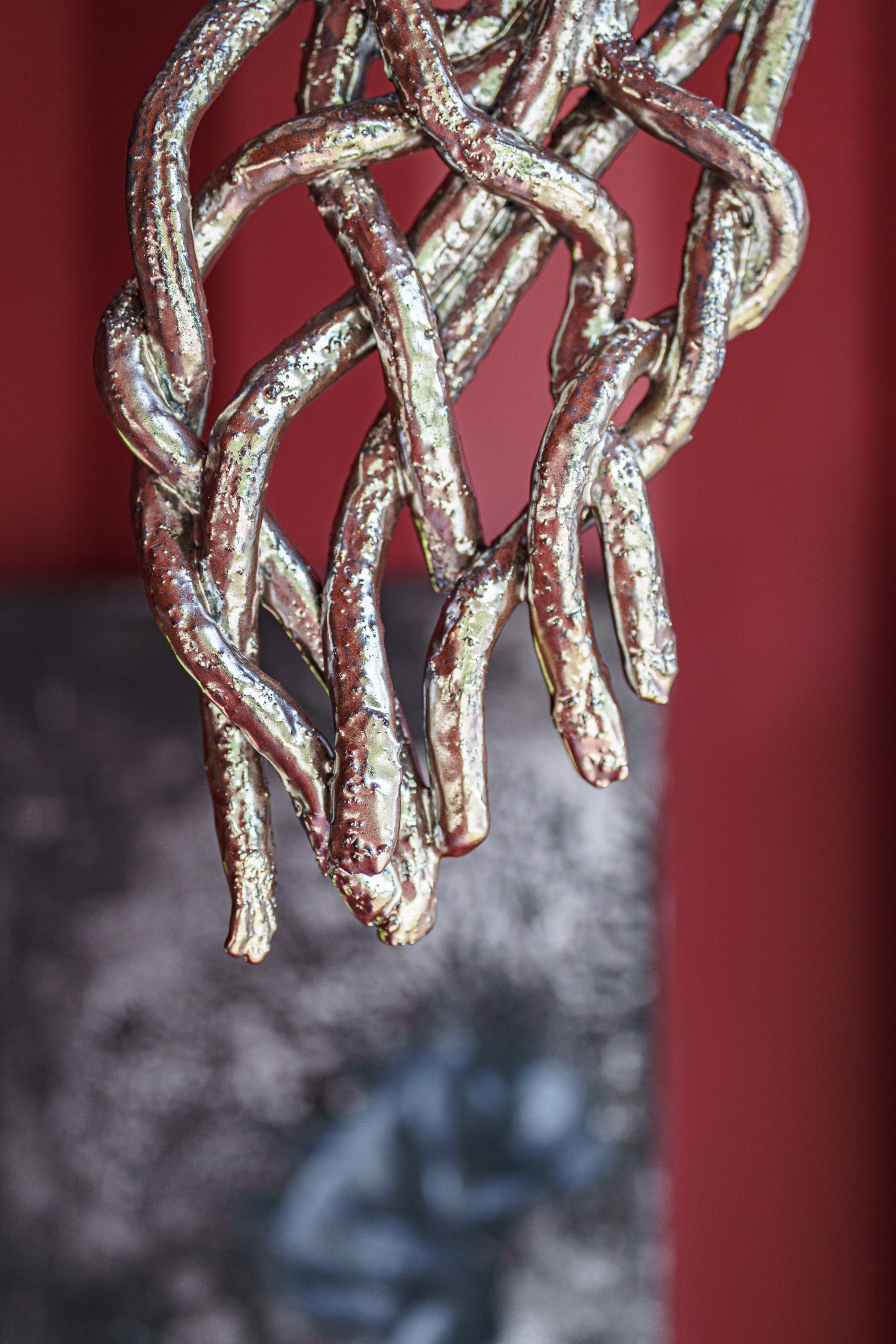
Space to look around | Geriëtte Willemsen
The expert I spoke with mentioned “being in a bind. That was the inspiration to do something with rope. That twisted, sturdy ship’s rope. Still, I thought that was too obvious, so I made it out of ceramic. As a material, it’s easy to shape but ultimately fragile. The dark color and rough texture reinforce that feeling. There is space between the forms. You can see through them. At first, the foundation is clear and under control, but later things start to unravel, just like in real life. Then things happen that you don’t expect or don’t understand. I therefore want people to come to better understand others through my work. No one consciously chooses this.
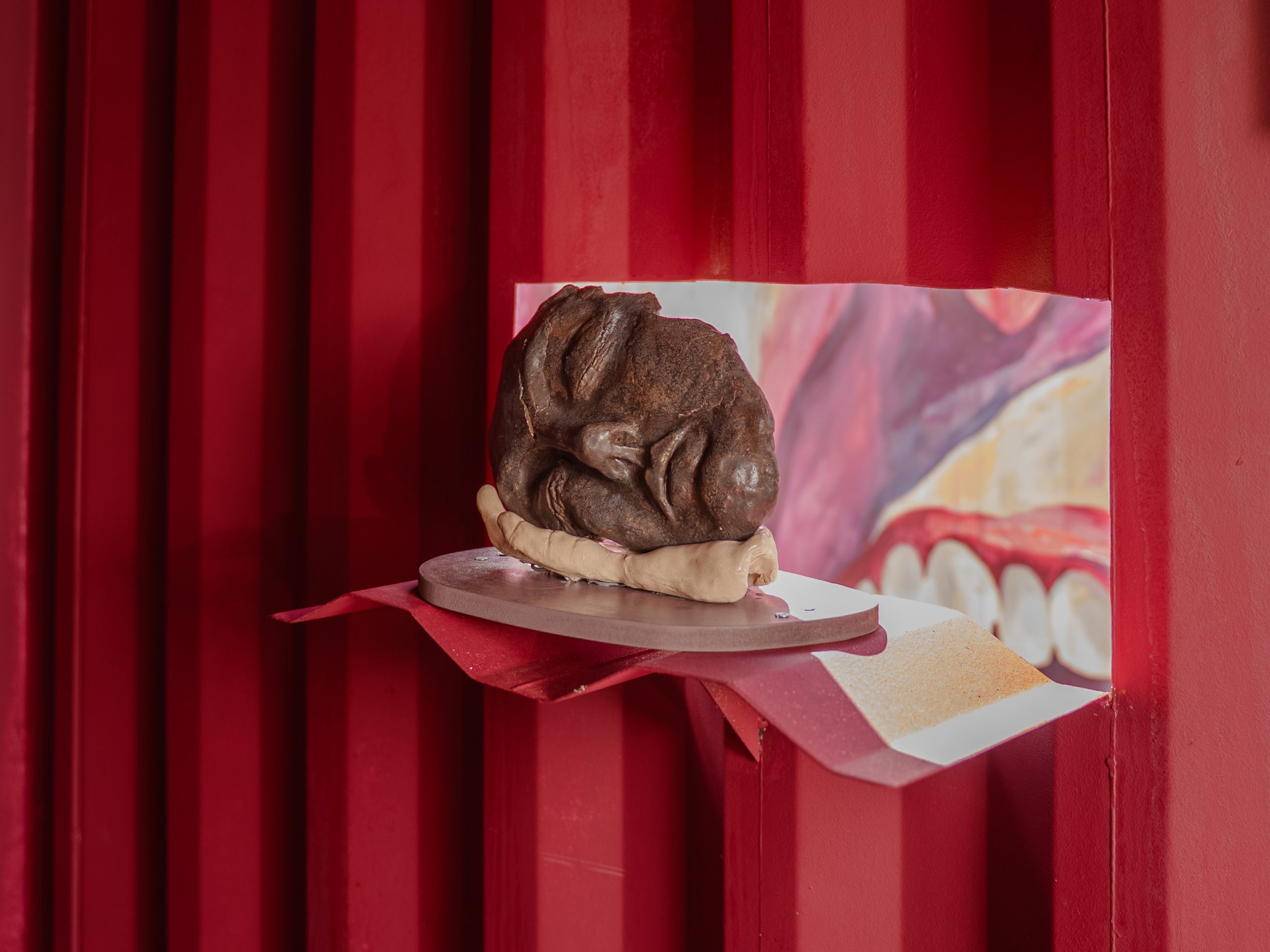
This is how it can feel | Hannah Biesaart
Mental changes can often be accompanied by a feeling of heaviness. You feel heavy. Not just in your head, but in your body as well. Even something small, like getting out of bed, can feel like too much. As if just lifting your head is already too heavy. I’ve depicted this feeling with a head resting on a hand. This was my first idea, and it stayed with me, partly because of my own experience and the stories of others about their struggles. I chose ceramics because it’s a medium that allows you to express emotion well. The material moves with your hands. With an extra layer, the cracks have appeared on the face. That shows the weight. I hope that people look at my work and think: ‘I’m not the only one.’
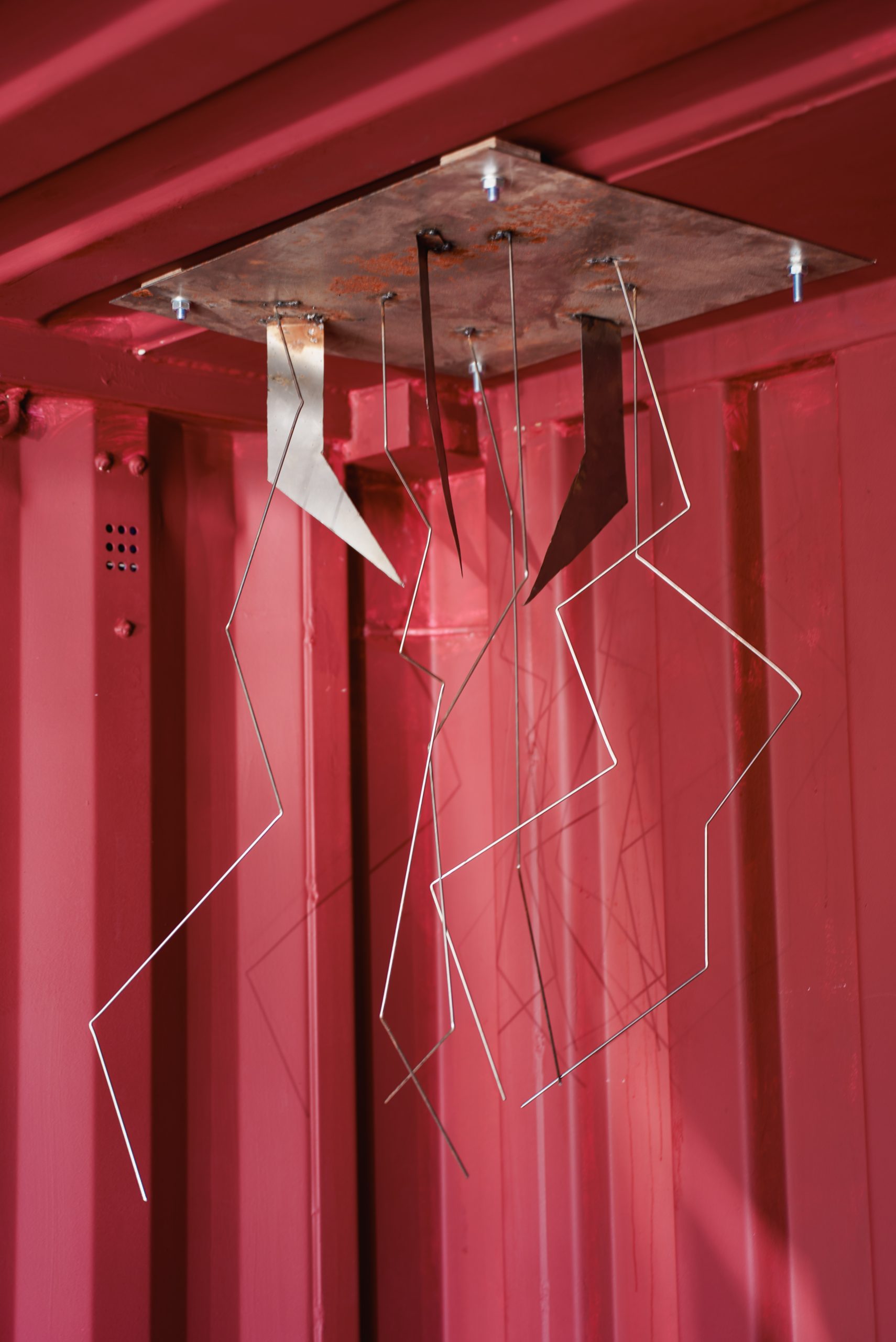
What’s stopping you? | Imko Verhoef
In an in-depth conversation with a lived experience expert, she told me that you ‘build a wall in your mind’. To me, that didn’t sound like a well-built, smooth wall, but like something dangerous, cold, and hard, that holds you back. A barrier. I wanted to use that coldness and hardness in my work. Building a wall felt too literal to me. I want people to stop and think for a moment when they see a work of art. It’s better to convey a feeling rather than directly appeal to the imagination. So I took a welding course and started working with metal. It had the sharpness and coldness I was looking for. While creating my work, I also discovered something: the metal parts make a cold, yet harmonious sound when they strike each other. That sound can evoke tension. As if something is clashing inside. I thought that was a beautiful discovery.
Fungi | Murron Janzen
Fungi is inspired by extraordinary stories. One of these stories is about the Lotus-Eaters from Greek mythology. In this story, Odysseus and his crew arrive on an island where they encounter the lotus plant. The fruits of this plant are as sweet as honey. Anyone who eats them falls into a narcotic sleep and never wants to go home again. In this way, a mental shift can slowly take over your feelings, as if a blanket were falling over you. You lose your grip, without knowing exactly when it began. It also refers to a fungus. This fungus acts as a parasite in insects. When an insect becomes infected, the fungus takes control. The insect then no longer has control over itself.
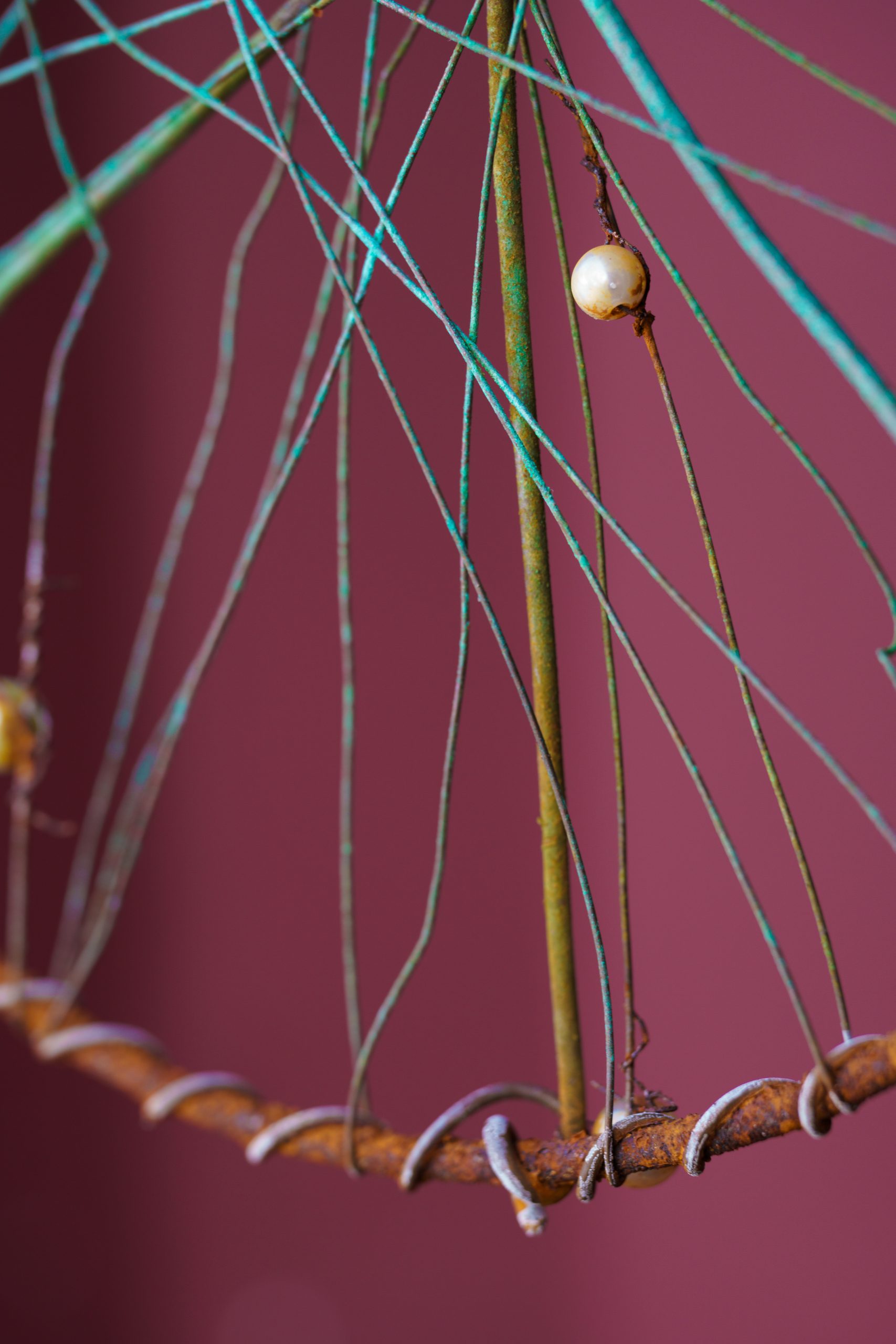
Do you recognize this feeling? | Letecia Grotens
The great thing about materials is that you can work with them. I prefer to do that in a variety of ways. In this case, I did that with metal, the material I work with most often. The search for a way to make it rust faster was very interesting. And it worked out well. It took a while, but it’s now completely blue instead of copper-colored. The colors and changes in the material show how something can slowly take root and occupy more space in your mind. This inspiration came from conversations with people who have lived through similar experiences, which were very valuable. It invites you to recognize your own feelings in it. It shows how thoughts and who you really are sometimes get mixed up. The round and simple shapes are open, in the hope that everyone will recognize something in them. It feels different for everyone.
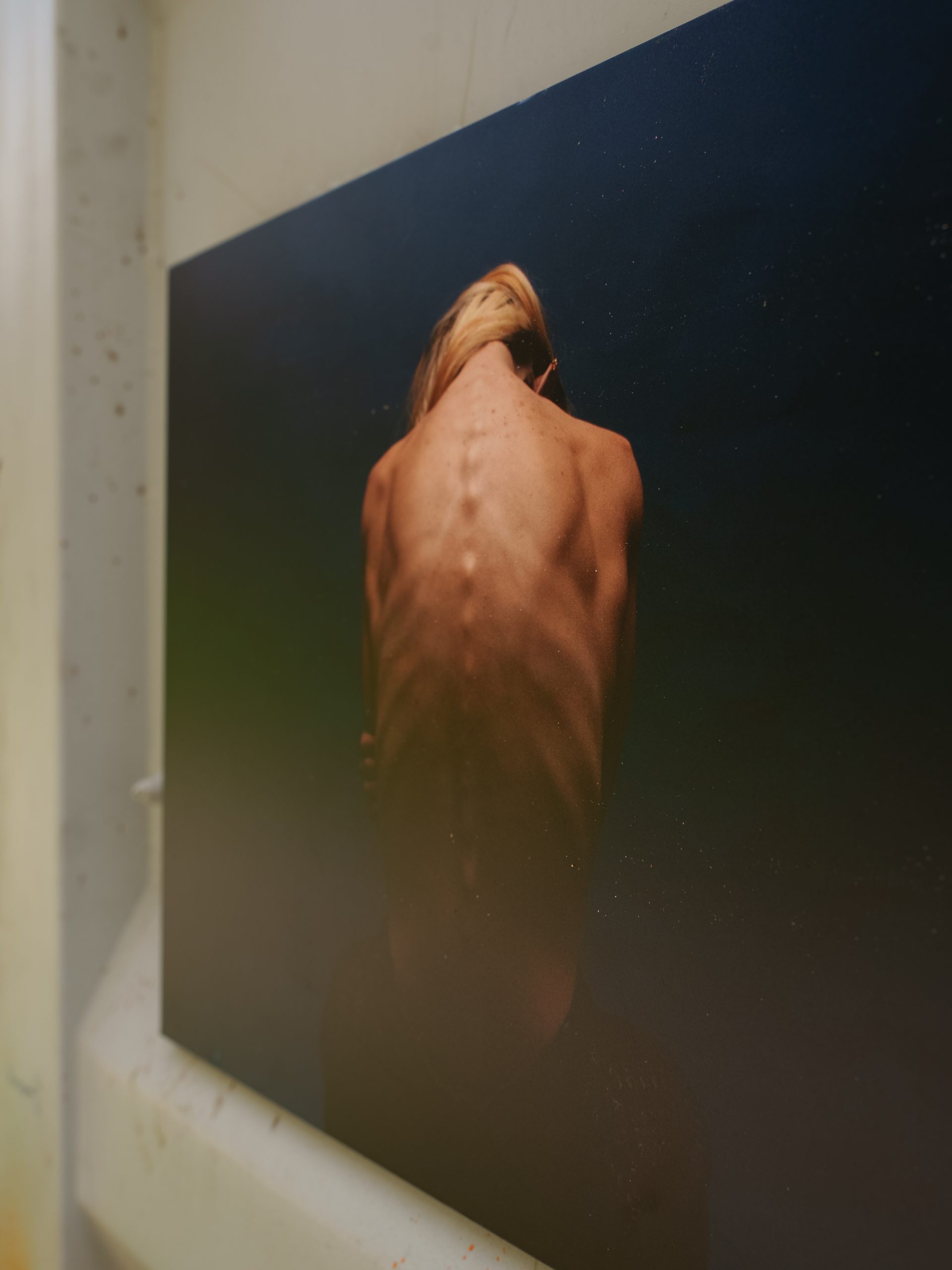
Thick skin, clean sheen | Lieke van Dongeren
I usually work with ceramics or recycled materials, but this time I chose photography. I had an image in my head, and I set out to capture it. I wanted to give this form using different materials later on. During the preparation phase, I took about eighty photos, and they turned out to be very powerful. I then selected three of them for my work in the container. The images clearly convey the feeling of someone who is struggling. People with lived experience spoke of ‘being locked up’ and feeling like a monster. Perhaps you recognize this feeling. That you feel small and vulnerable, even though no one can tell from the outside. I tried to capture this in images. If you haven’t experienced it yourself, it feels distant. You realize just how big that gap can be. Between what you see and what someone is actually experiencing. I therefore hope that my work helps people to better empathize with others.
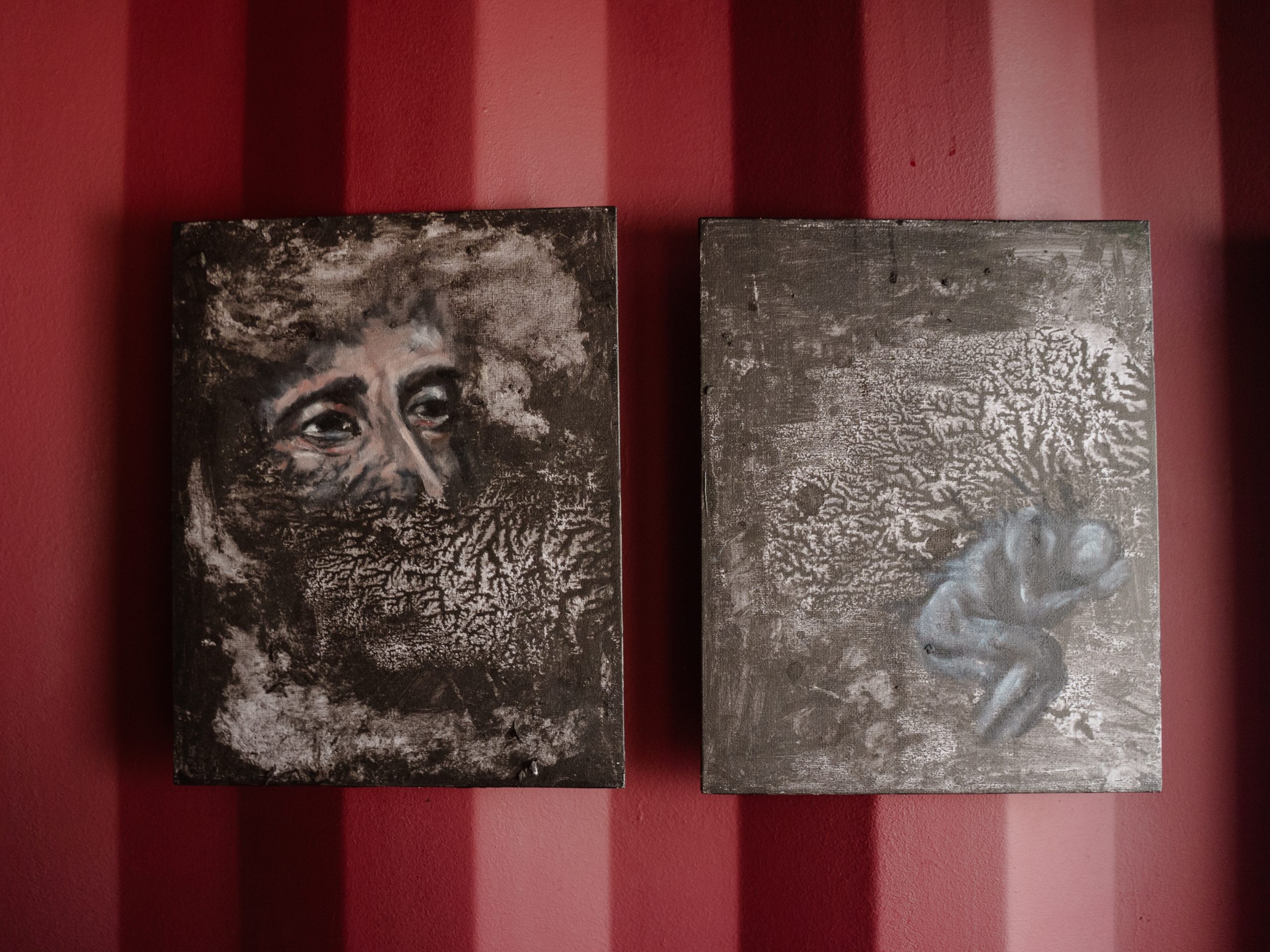
Asking for help | Ricardo Koppejan
How does it feel to be stuck, as if you have nowhere left to go? And how do you show that? I prefer to work with eyes, because they say so much. When the rest is silent, eyes are actually always speaking. They can plead for help. The people with lived experience I spoke to talked about ‘being stuck’. Not daring to ask for help. I wanted to capture that. A bit like how I felt during the lockdown. That was a tough time. I got stuck quite often in the creative process, but I’m satisfied now. It was all about the eyes… they had to be there. It shows how hard it can be to ask for help. At the same time, it invites you to look more closely at others. Because sometimes a single simple question can make all the difference: Are you okay?
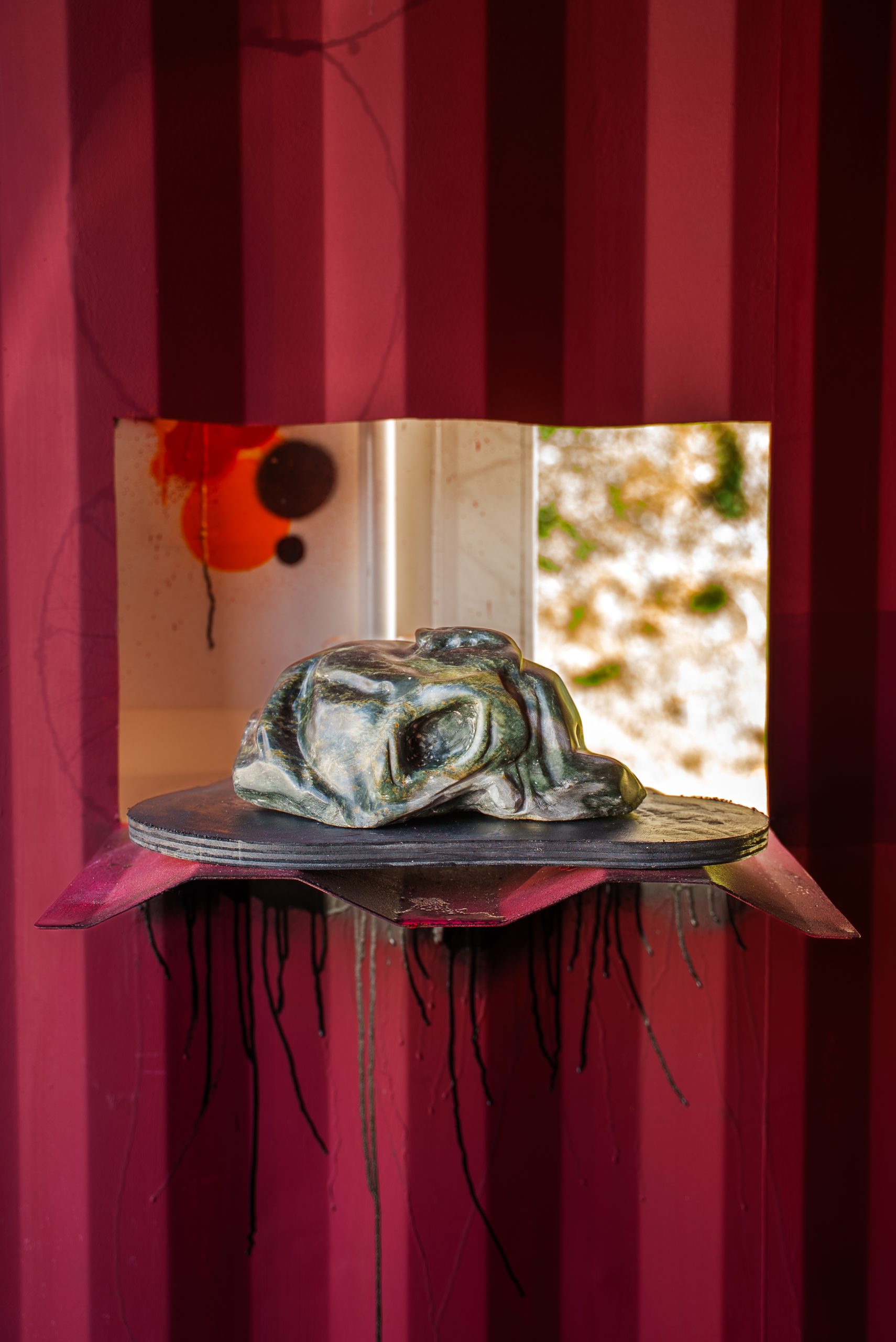
Zombi | Murron Janzen
The two heads seem to be melting together. They hang heavily and move slowly. It feels as if you’re in a kind of sleep or trance, completely numb. Your head becomes still and empty. As if a blanket were draped over you. You feel less and lose yourself a little. This is what depression can feel like. The name Zombi comes from a history of slavery. The word was used for people who no longer had control over their own lives. They felt little and were far removed from themselves. In Haitian folklore, people believed that a body could move without a soul. This stemmed from a belief system called Vodou. Spirits could influence people and take over their bodies. This image captures that feeling. As if you’re still there, but no longer fully present.
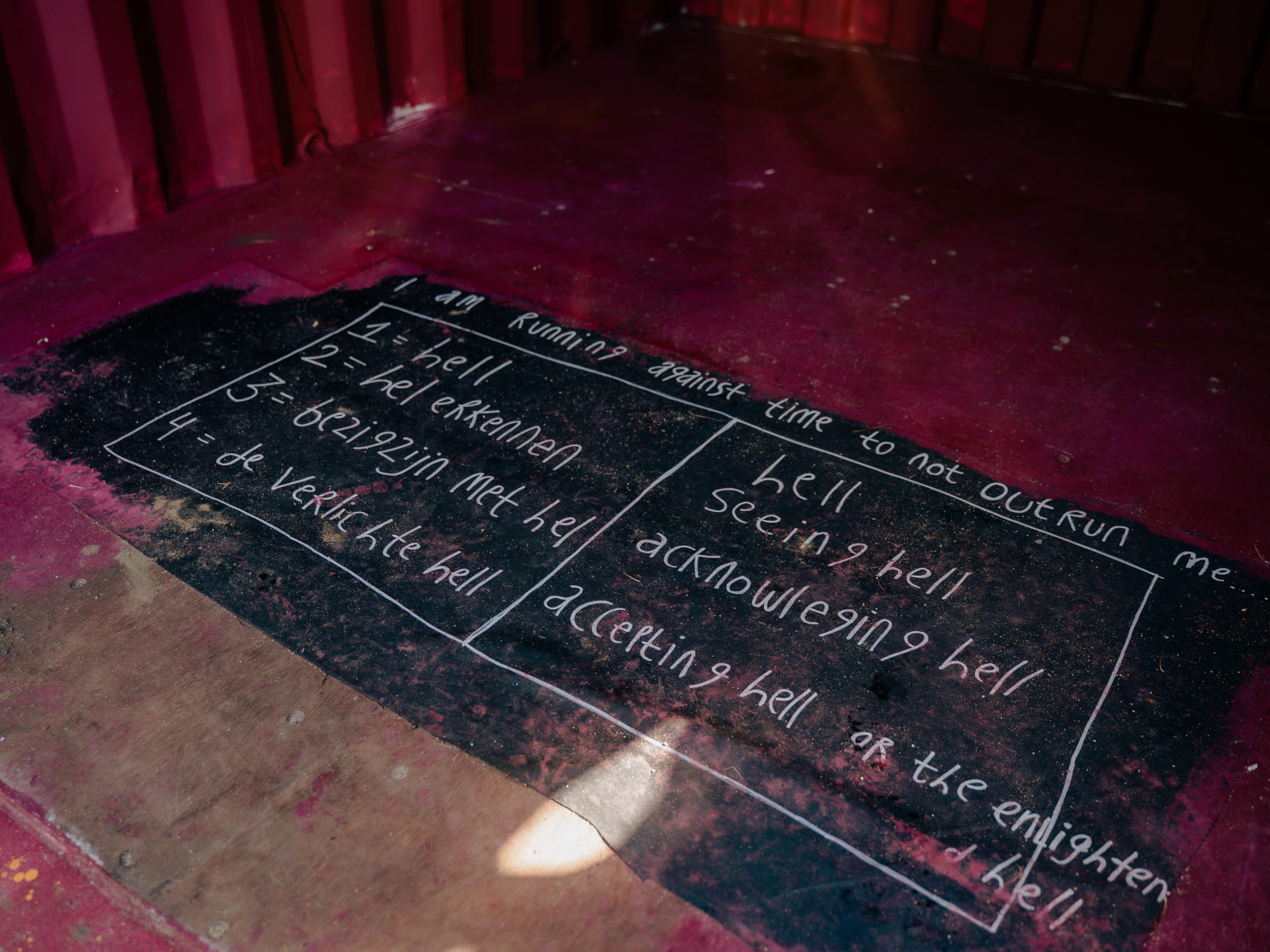
I have to write | Lieze Marieze Tazelaar
For me, text, reading, and poetry are all a medium. Forms emerge from them. But it works the other way around, too. Sometimes I create an image, and then text finds its way in after all. Starting from language and words feels most natural to me. I have to write; I can’t avoid it. Beneath the world we see, there are many layers. I try to bring those to the surface. I ask a lot of questions and I read about them. You can see that reflected in this work. You don’t necessarily have to read it; the sheer number of words together already has an effect. I hope people see questions or phrases they recognize from their own lives. And that this leads to less loneliness and more recognition. Because many people have questions, but don’t realize others do too.
PHASE 2 | SEARCHING FOR MENTAL STABILITY
In the phase ‘Searching for Mental Stability’, you try to cope with the changes in your mind and body. You look for ways to feel better, and this involves a process of trial and error. Sometimes you go with the flow, and sometimes you resist it. There is movement: searching, feeling, and slowly finding your way again. Thoughts and feelings can become tangled. It can feel like a spiral that’s hard to escape. The works in this container reflect that search. From forms that keep moving and never truly settle, to a flag that cannot flap and holds onto tension. You also see how emotions can pile up or linger, like a scream that won’t stop.
ARTEZ UNIVERSITY OF THE ARTS
The work of six students from ArtEZ University of the Arts in Arnhem shows how each of them, in their own way, is trying to cope with inner turmoil and change. Created by: Leticia Mendes Dias, Zus Houben, Lieze Marieze Tazelaar, Zoe Kyriakou, Anne Hovinga, Camila Ferrabone Ledezma
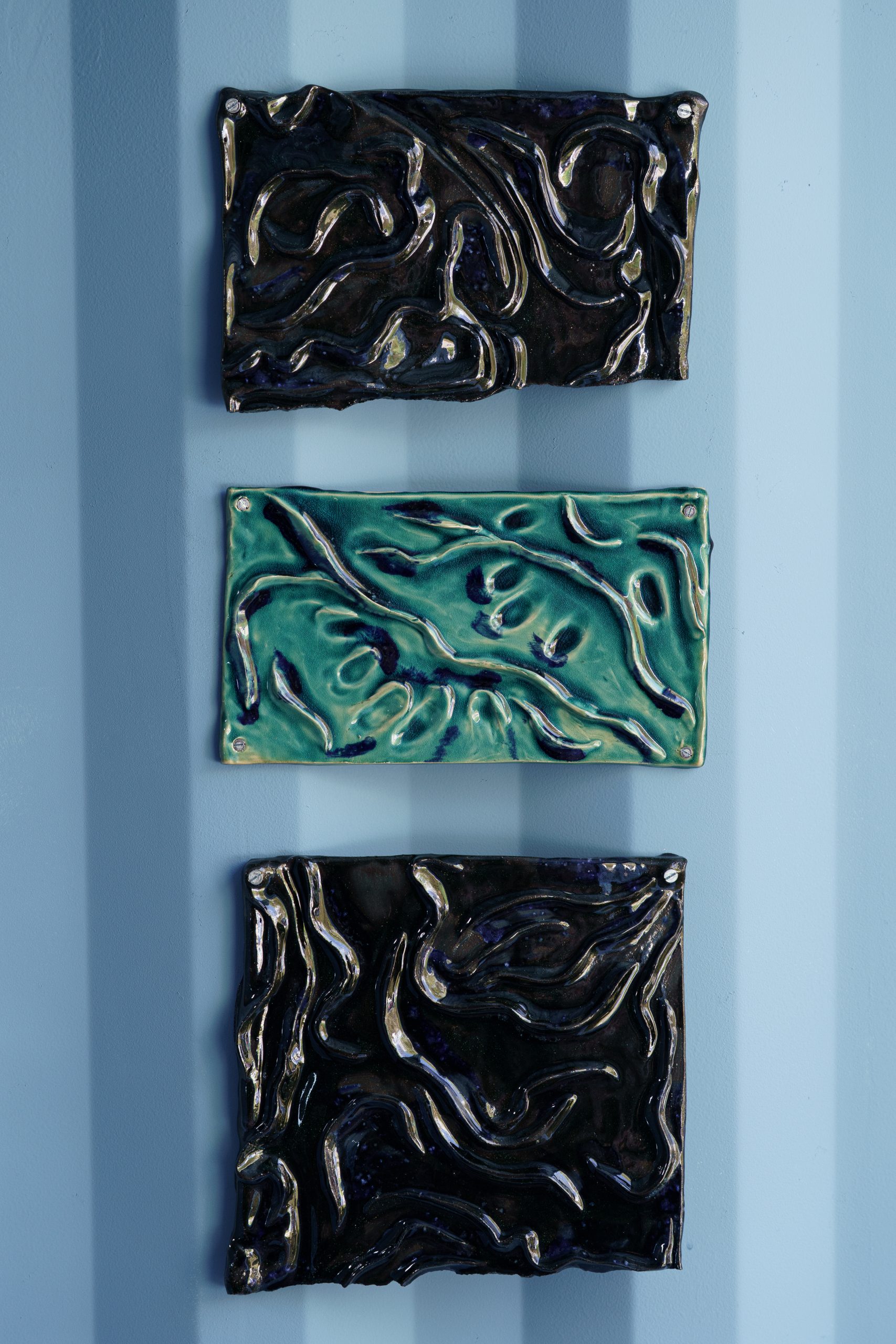
Touch it | Leticia Mendes Dias
The container where my work is exhibited is about change and the search for mental stability. For me, that phase is over, but I, too, once found myself in that struggle. My work is the ceramic translation of that struggle and search: the feeling is always in flux and seems to have no end. The lines in my work therefore seem to move, and I hope people will touch them. That can also bring a sense of calm. I deliberately chose an abstract form and let my hands do the work. That’s how the waves came to be. It’s nice to make them with your hands; I really enjoyed that. The shapes and lines invite you to touch them. Through that contact, you can feel for yourself what it does to you. It can bring peace, but it can also evoke restlessness or raise questions. I hope you touch my work and ask yourself: ‘What am I actually feeling?’

The universal distress signal | Camila Ferrabone Ledezma
••• — •••
People who need help are often vulnerable. They don’t readily show their feelings to others. That’s why I used the well-known SOS distress signal. I also made the artwork very small, just 1 by 2 centimeters, so you have to look more closely. That’s also the message: pay close attention to yourself and the people around you. We often realize too late that something isn’t right, whether with ourselves or with someone else. With a magnifying glass, you can see the details better. You see the fine lines and sharp edges in the red material. The work invites you to look closely. That makes it more personal. Even if you don’t immediately recognize yourself in the work, the experience still has an effect on you.
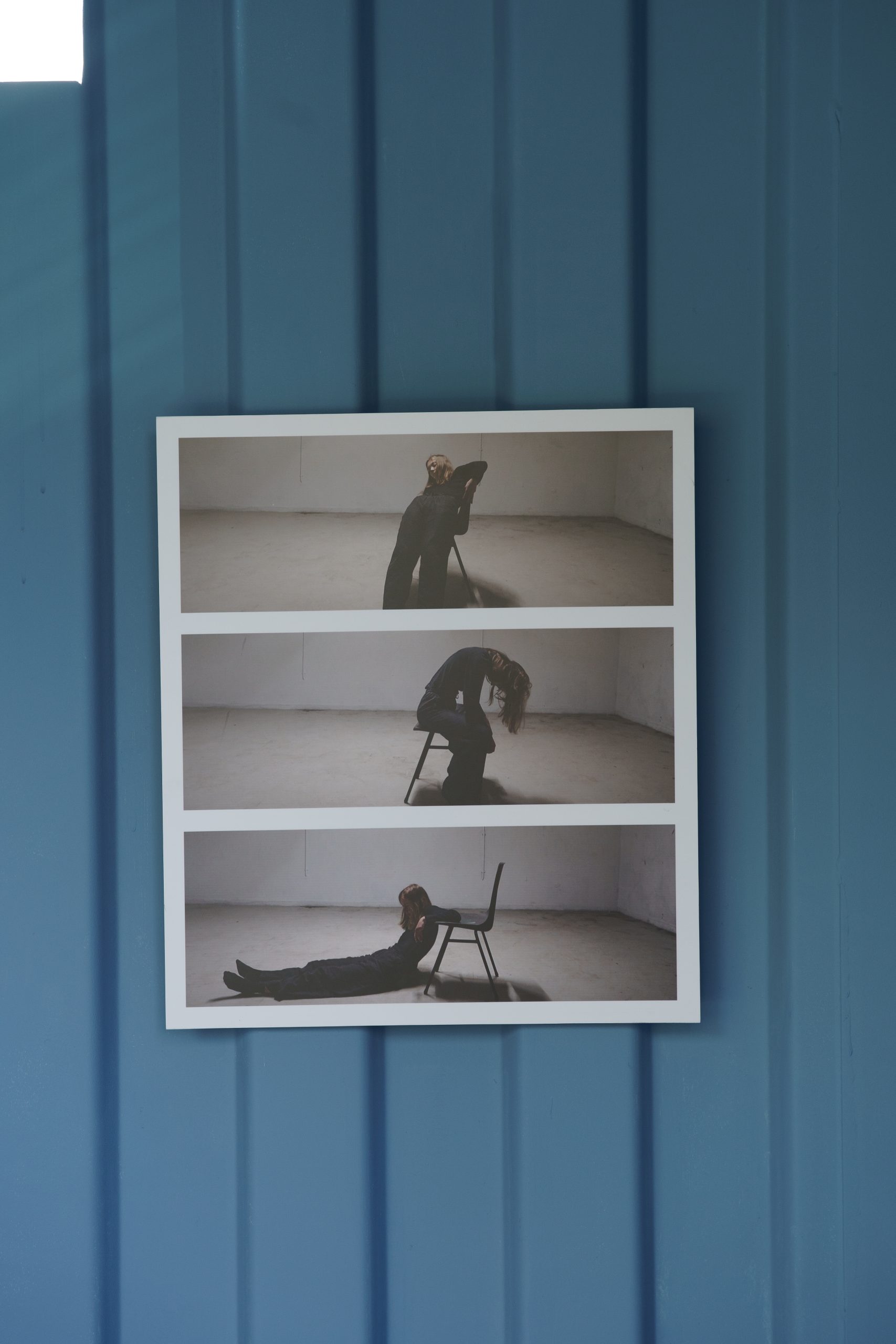
Internal struggle | Anne Hovinga
Through my work, I want to show the struggle. The struggle in your mind, with yourself. Everyone experiences it in their own way. A vulnerable approach helps us recognize that struggle, even in others. The inspiration came after we made a short film about loss for another class. In that film, we also captured the ‘heaviness.’ I set up a camera on a tripod and walked around the room. An experiment, with myself in the lead role. In doing so, I used my body and posture to represent the heaviness. I made a selection from those images. Viewers are free to interpret them in their own way. To create their own feelings. If they, too, dare to show their vulnerable side, they can
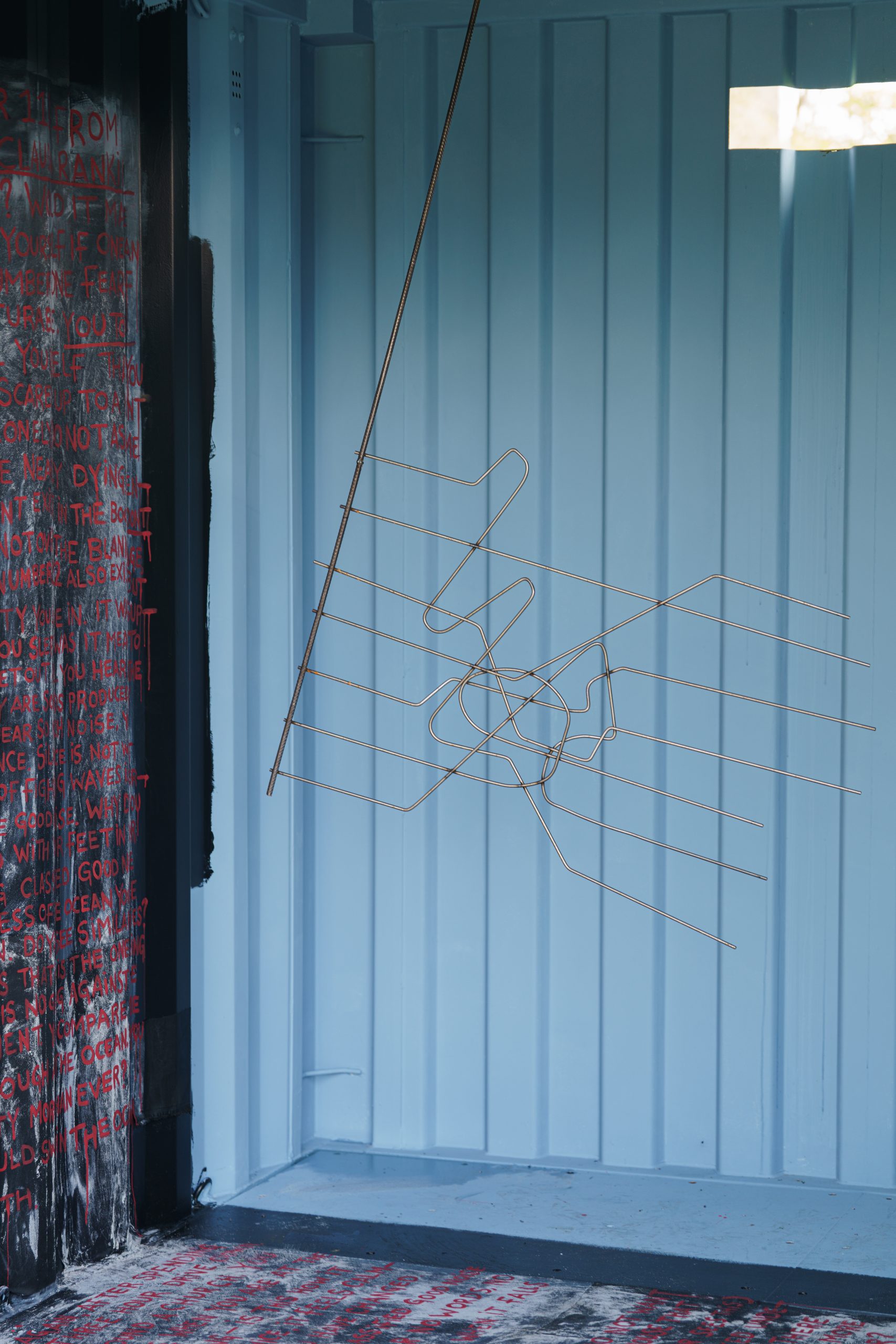
A symbol | Zus Houben
Why a flag? It’s a kind of sign. A flag communicates as a recognizable symbol. It reveals something to the outside world. The lines start out straight and become tangled further on. You can now interpret it for yourself. The work certainly draws on my own experience, but it’s not a solution for me. Above all, I hope it evokes a feeling in you. Or gives you the impulse to regain your footing. Why a flag? It’s a kind of signboard. A flag communicates as a recognizable symbol. It reveals something to the outside world. The lines start out straight and become tangled further on. You can now see your own interpretation in it. There is certainly personal experience in the work, but it is not a solution for myself. Above all, I hope it gives you a feeling. Or an impulse to regain a sense of control.
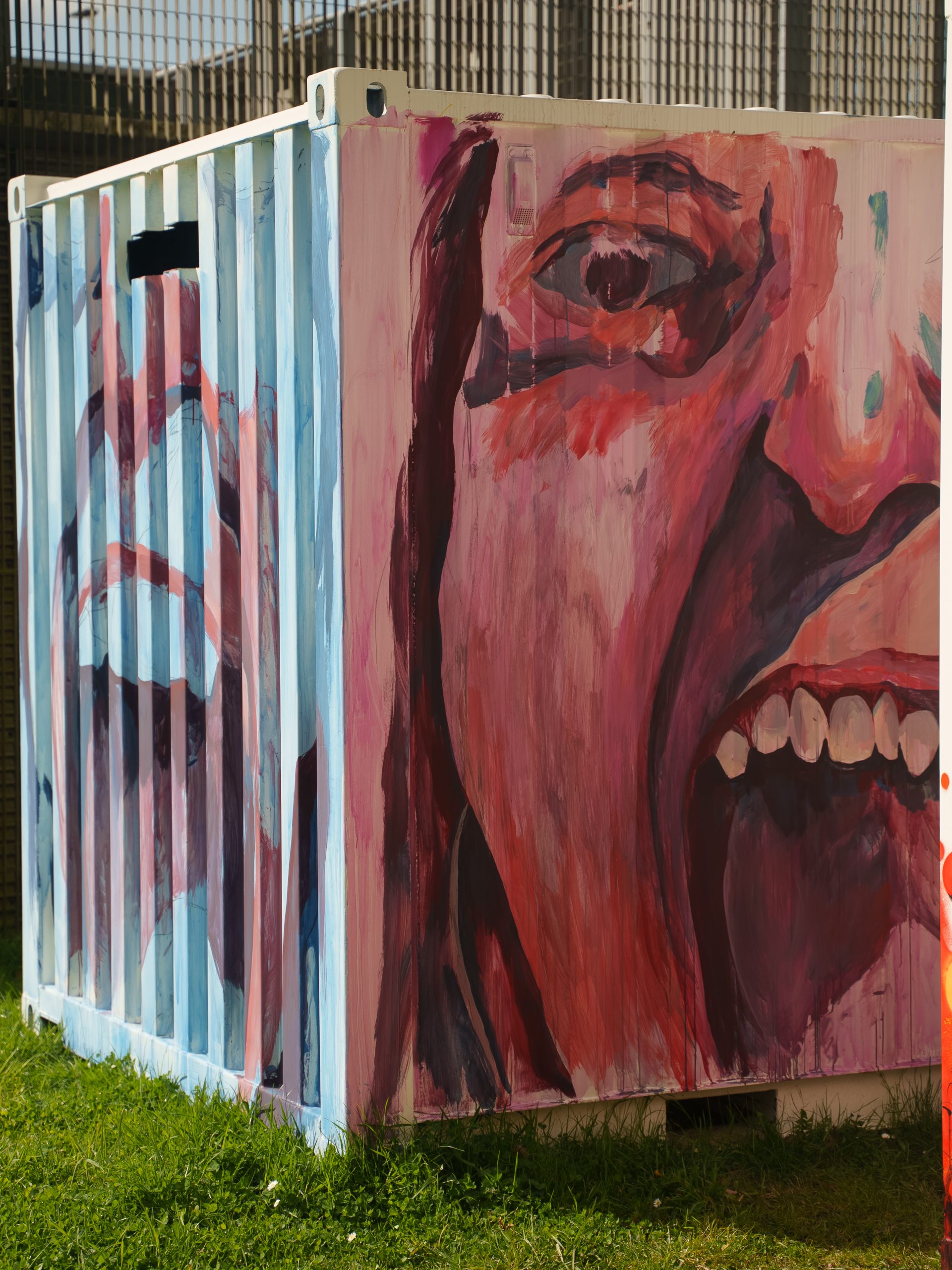
Capturing the moment | Zoe Kyriakou
When I saw three small paintings about screaming, I saw it as an idea. Usually, you only scream for a moment. Then the disturbance stops. But this form of expression is also valuable information in itself. I wanted to explore what happens when the screaming continues, as if you were freezing the moment. My painting style is expressive. You can see the brushstrokes very clearly. In this way, the colors and the movement become another form of screaming. During the process, I heard stories from people I wouldn’t normally meet. I incorporated their vulnerability and my own into the paintings. It’s important to share this message.
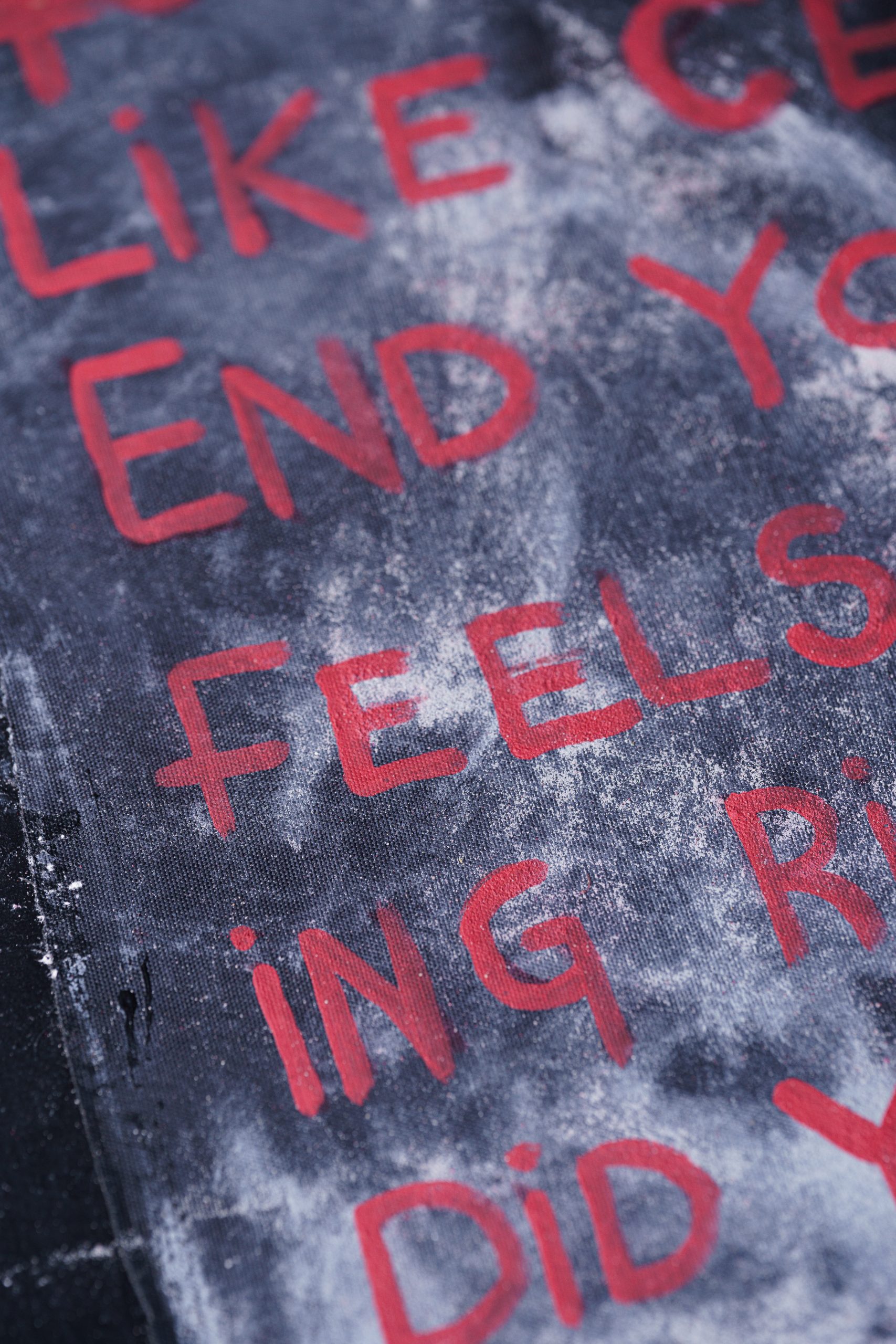
I have to write | Lieze Marieze Tazelaar
For me, text, reading, and poetry are all a medium. Forms emerge from them. But it works the other way around, too. Sometimes I create an image, and then text finds its way in after all. Starting from language and words feels most natural to me. I have to write; I can’t avoid it. Beneath the world we see, there are many layers. I try to bring those to the surface. I ask a lot of questions and I read about them. You can see that reflected in this work. You don’t necessarily have to read it; the sheer number of words together already has an effect. I hope people see questions or phrases they recognize from their own lives. And that this leads to less loneliness and more recognition. Because many people have questions, but don’t realiz
PHASE | 3 PERSPECTIVE ON MENTAL HEALTH
In the phase ‘Perspective on Mental Health’, you may gradually begin to see your experiences in a different light. You gain greater insight into your situation. Sometimes you fear a relapse, but you also discover what helps you. You learn what steps and adjustments are needed to move forward. The works in this container illustrate what it feels like to seek balance once again. The world may feel different than it does to others, as if something isn’t quite right. There is an imbalance, but also growth. This creates space for hope, light, and understanding. This phase is about trial and error, but also about the realization that recovery is possible.
MINERVA ACADEMY
In this container, you are in the ‘Perspective on Mental Health’ phase. There is a fear of relapse, but also a growing awareness of the tools and adjustments that help you move forward. Unlike the earlier phases, the work in this container was created collaboratively by students at the Minerva Academy in Groningen. The container symbolizes the sense of imbalance and isolation that people can experience. Created by: Jeanine Jay Zuidhof, Levy Melle Boorsma, Sophie Jassies, Flynn Reheis
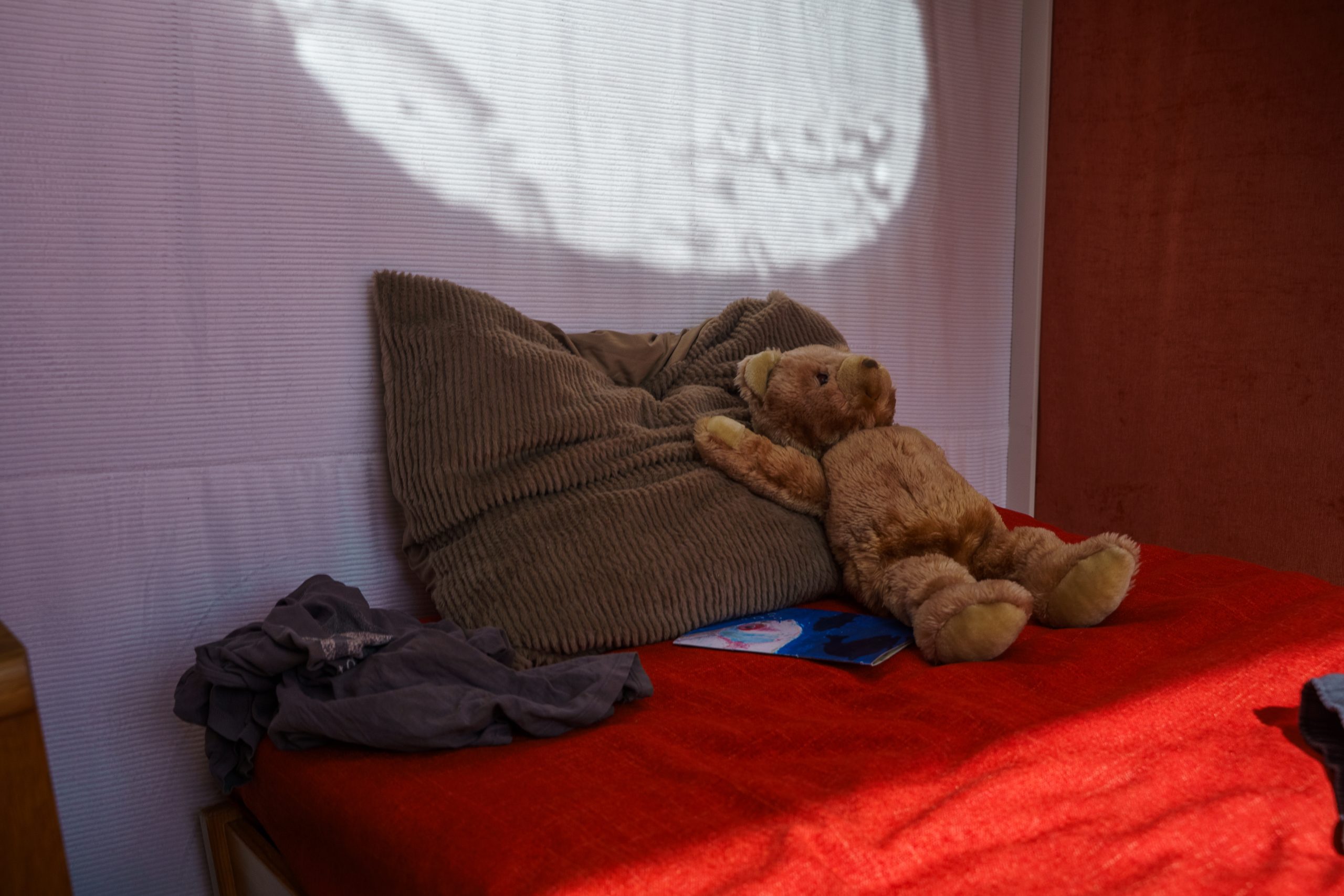
INTERIOR
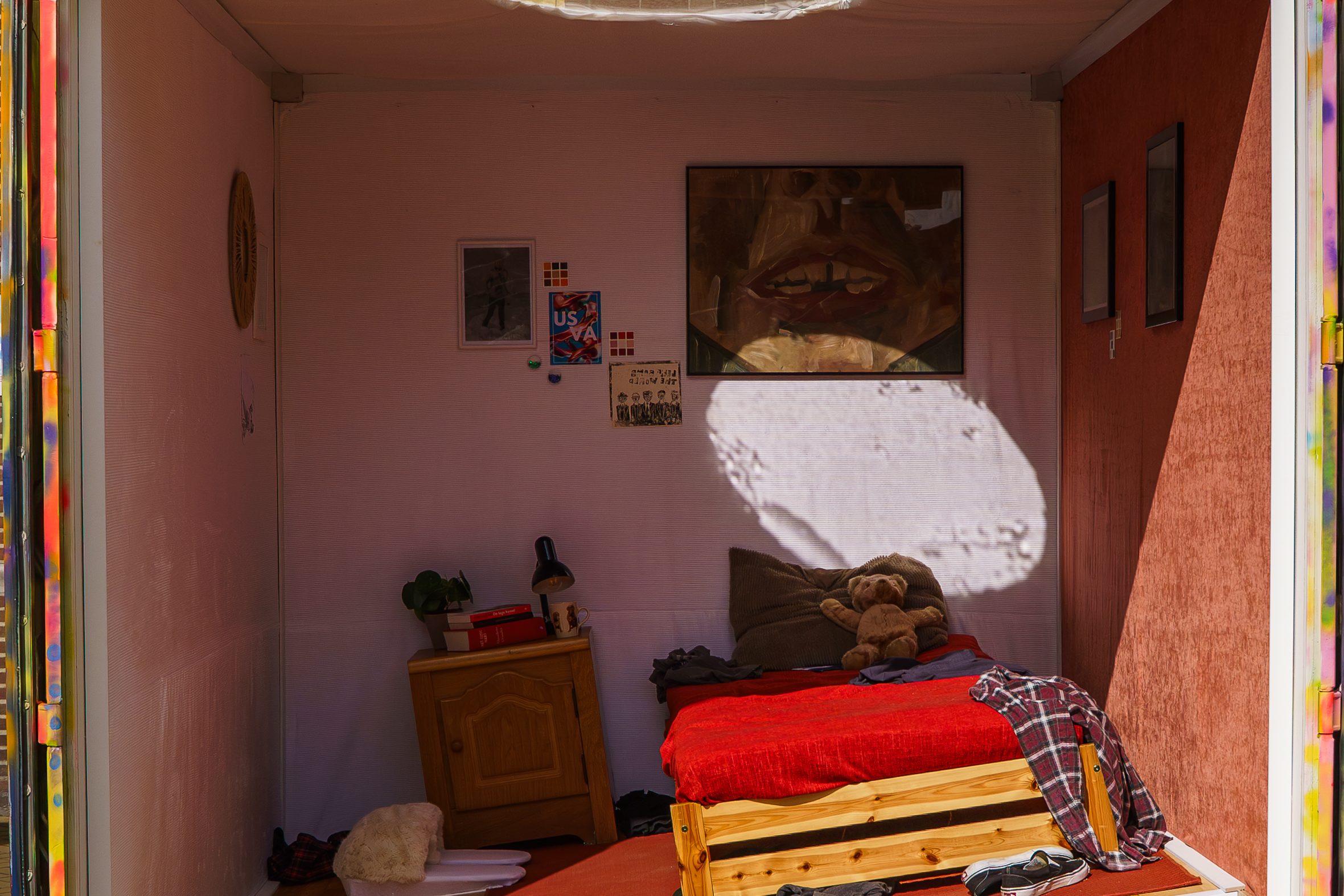
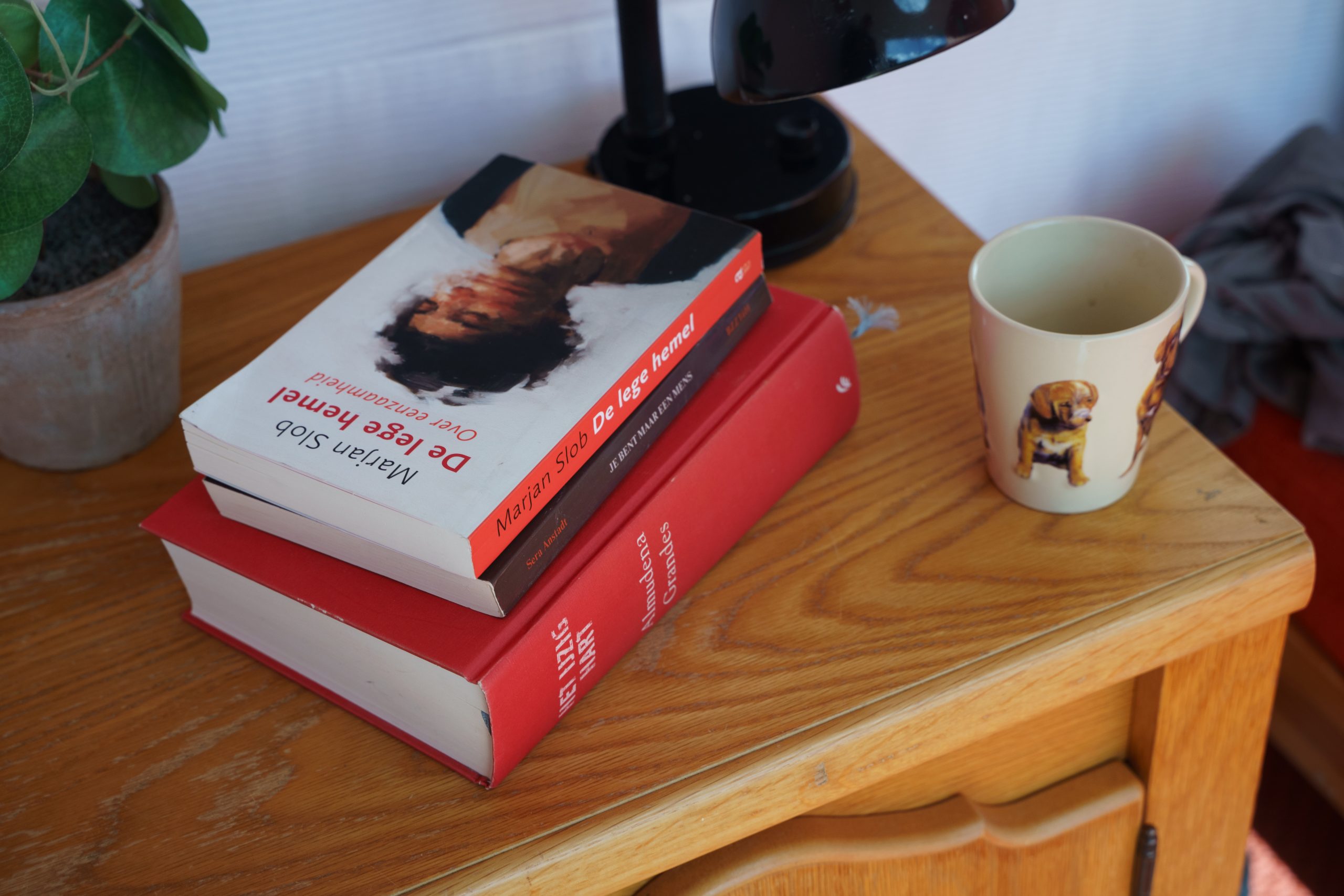
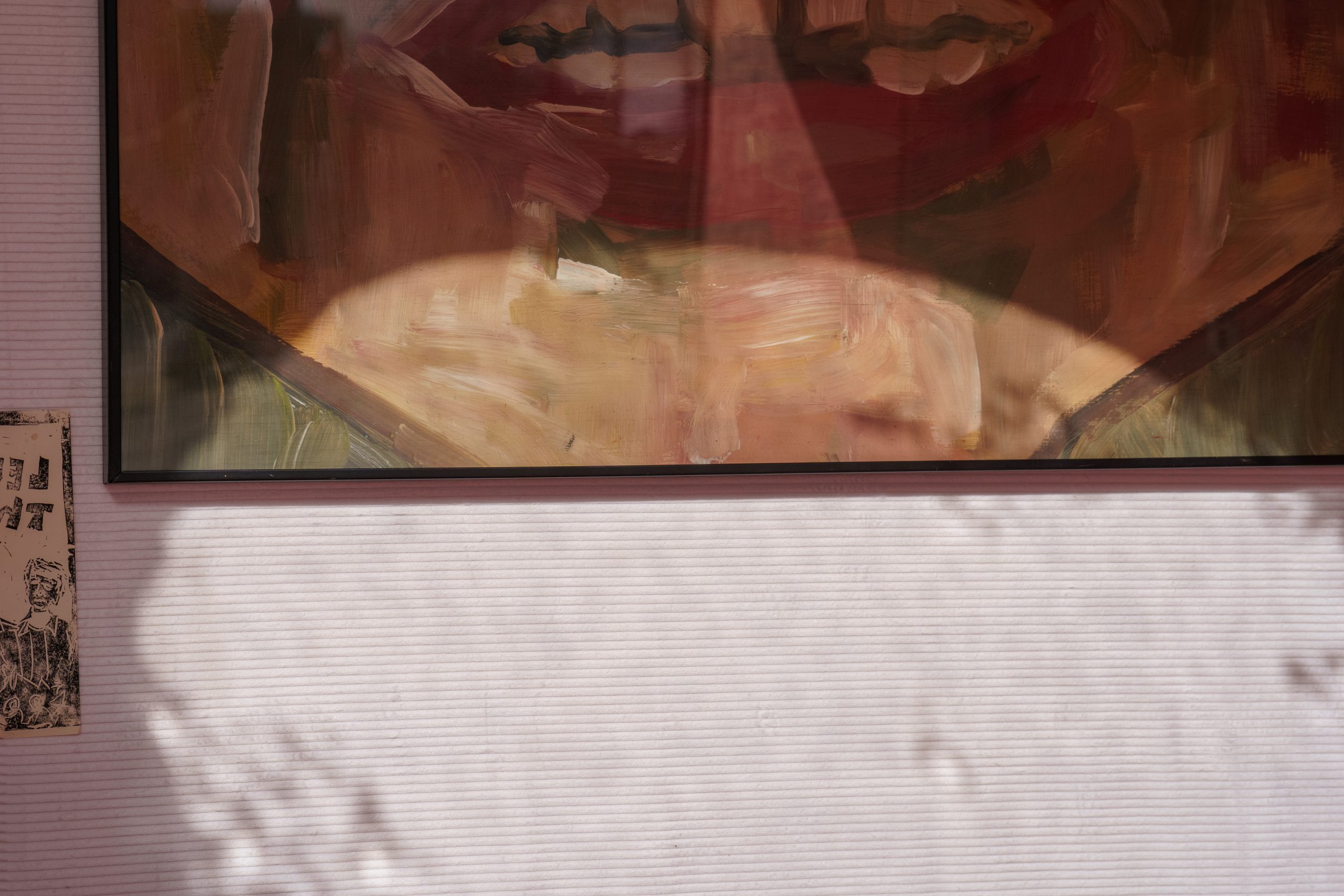
When you step inside, you enter a space that feels like a bedroom. A place that can be safe and familiar, but can also turn into a place where you feel alone. The floor is tiled at an angle, causing you to literally lose your balance. This represents how it can feel when you’re not mentally stable. In the room are large shoes that stand perfectly upright. When you step into them, you regain your balance. The soft walls provide a sense of security, but can also feel like a wall that cuts you off from the outside world. Light streams in from above. This beam of light represents hope and a possible way out. The space shows that, despite imbalance and isolation, there are ways to find balance again.
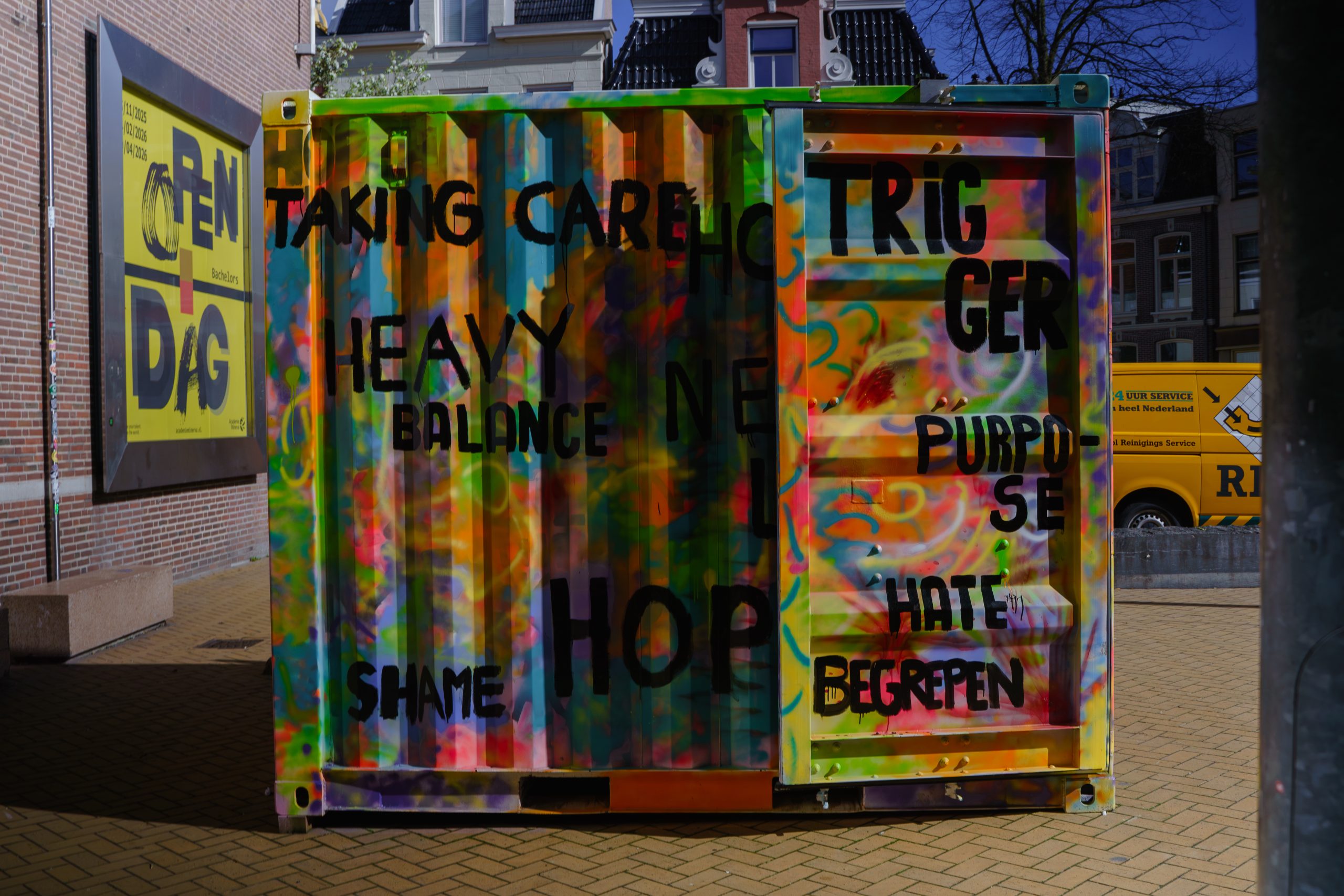
EXTERIOR
On the outside of the container are words that seem to be opposites, such as growth and stillness, hope and doubt. These words show that mental health isn’t black and white. Between these extremes, there is room for nuance. Together, they paint a picture of different feelings and experiences that can coexist.
The colorful background and the layering of the text highlight just how complex this phase can be. It shows that a person can experience multiple feelings at the same time.
It invites us to reflect on these contradictions and to acknowledge that mental health does not follow a single path.
INTERVIEW
For this phase, students from the Minerva Academy in Groningen were interviewed about the creative process. They explain how they translated the feeling of imbalance and isolation into the space and what they hope visitors will experience.
A sense of imbalance… how do you create that in a perfectly straight container?
Jay: “With a uneven floor. When you walk inside, you literally feel the imbalance. The shoes on the floor, on the other hand, are perfectly level: when you stand in them, you feel optimal balance again. We made the shoes extra large so that anyone can easily step into them—while wearing their own shoes.
And you also mention ‘isolation.’ How should I interpret that?
Levy: “The space is designed as a cozy bedroom, complete with a made-up bed. The walls are made of fabric, which creates a soft embrace. The bedroom is a place where you’re safe, can be alone, and don’t have to share anything. But it can also become a wall that protects you. Then it becomes a prison. That’s why light now comes through the roof: there’s a way out. The beam of light feels hopeful. All in all, the message is that there’s a way for you, too, to cope with it and learn to live with it.
And the exterior is something else entirely…
Levy: “Yes, that idea came from our classmate Flynn Reheis. He came up with the words and discussed them with us. A second-year class then got to work with his words. They’ve also added a few more pieces that fit in well.
How did you experience the creative process?
Jay: “Levy paints a lot, and I usually work with textiles. Now we were working with metal and wood, and that was quite unfamiliar. It was a steep learning curve for us. The ideas came quickly, but executing them was difficult at first. Fortunately, we had a lot of help, including from our workshop supervisors and a former student.” Levy: “Meeting with experts who’ve been through it was also educational during the process. Those conversations help you not take everything personally, but keep some distance. Now, the concept is quite personal, so there’s always a bit of your own experience involved.” Jay: “Yes, you do come face to face with yourself. It’s good that you can give shape to your emotions through art. I hope we can pass that on to other people. The idea that you can find stability again.”
Is that what people should start to feel?
Levy: “Hope is central to our concept. You can find balance again, there is light, things can truly change… that’s important.” Jay: “And also a bit of understanding. Someone might look perfectly fine on the outside, but at the same time feel very strange, hence the slanted floor. Someone might wake up every day with that feeling: something’s not right, I don’t feel strong enough. If you’ve been inside the container, you might understand that better. After all, the world can feel very different to that person than it does to you.”
PHASE 4 | TOGETHER MENTALLY STRONG
In this phase, you realize that mental health isn’t just about you, but that the people around you also play a role. Through attention, understanding, and openness, space can be created to share what’s difficult. And to support one another, in your own way. Being together doesn’t mean everything has to be solved, but that you don’t have to carry the burden alone. The works in this container show how important connection is. Support from others can help you move forward again. At the same time, you can also be there for someone else. Memories of difficult moments remain, but there is also room for growth and new energy. Like a tree that sprouts leaves again after winter. This phase is about becoming stronger together, with room for hope and recovery.
ACADEMY OF POPCULTUUR
In this container, you are in the ‘Mentally Strong Together’ phase. There is room for hope, support, and reflection. In this phase, the focus is on the power of connection and collaboration. Students from the Academy for Pop Culture in Leeuwarden worked together to create the artworks and installations. The container as a whole demonstrates how we can strengthen one another and how connection creates space for healing, growth, and renewed energy.
Created by: Mare Bonnema, Meike Deen, Merel Gietema, Eli Kramer, Luca Posthuma, Jasmijn van Roessel, Aisha Stalman, Jannes Teusink, Thomas van Kester, Femme de Vries
INTERIOR
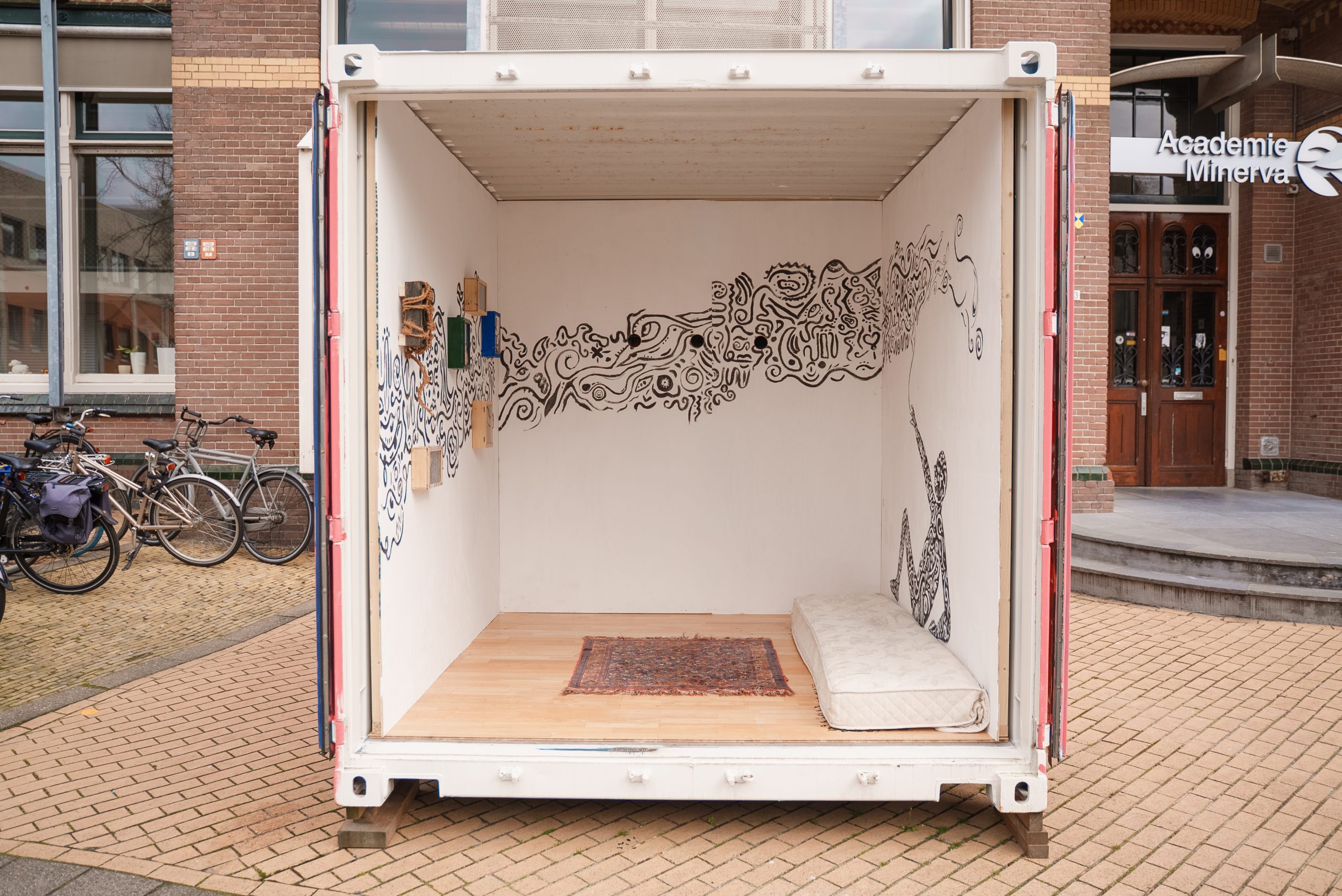
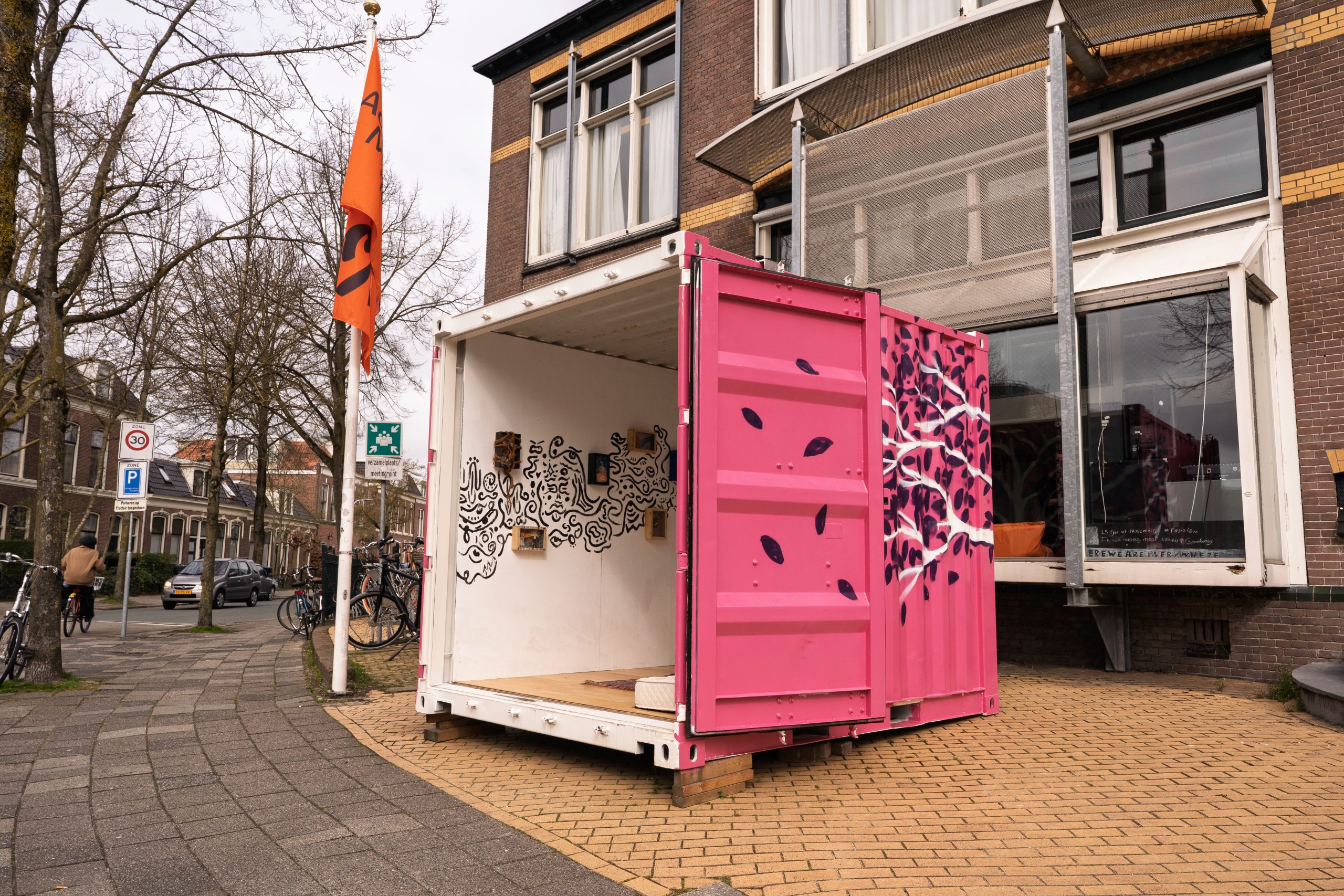
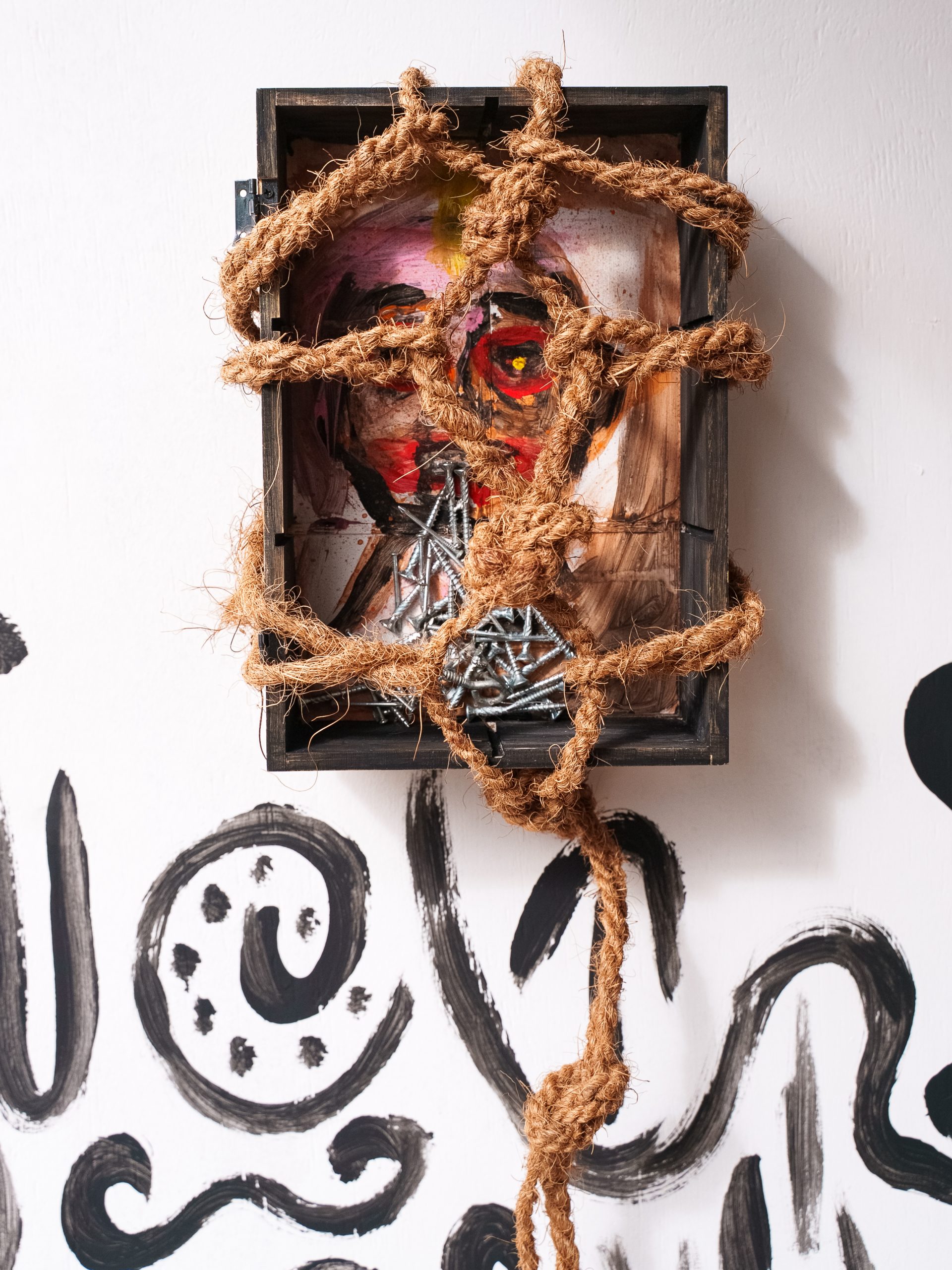
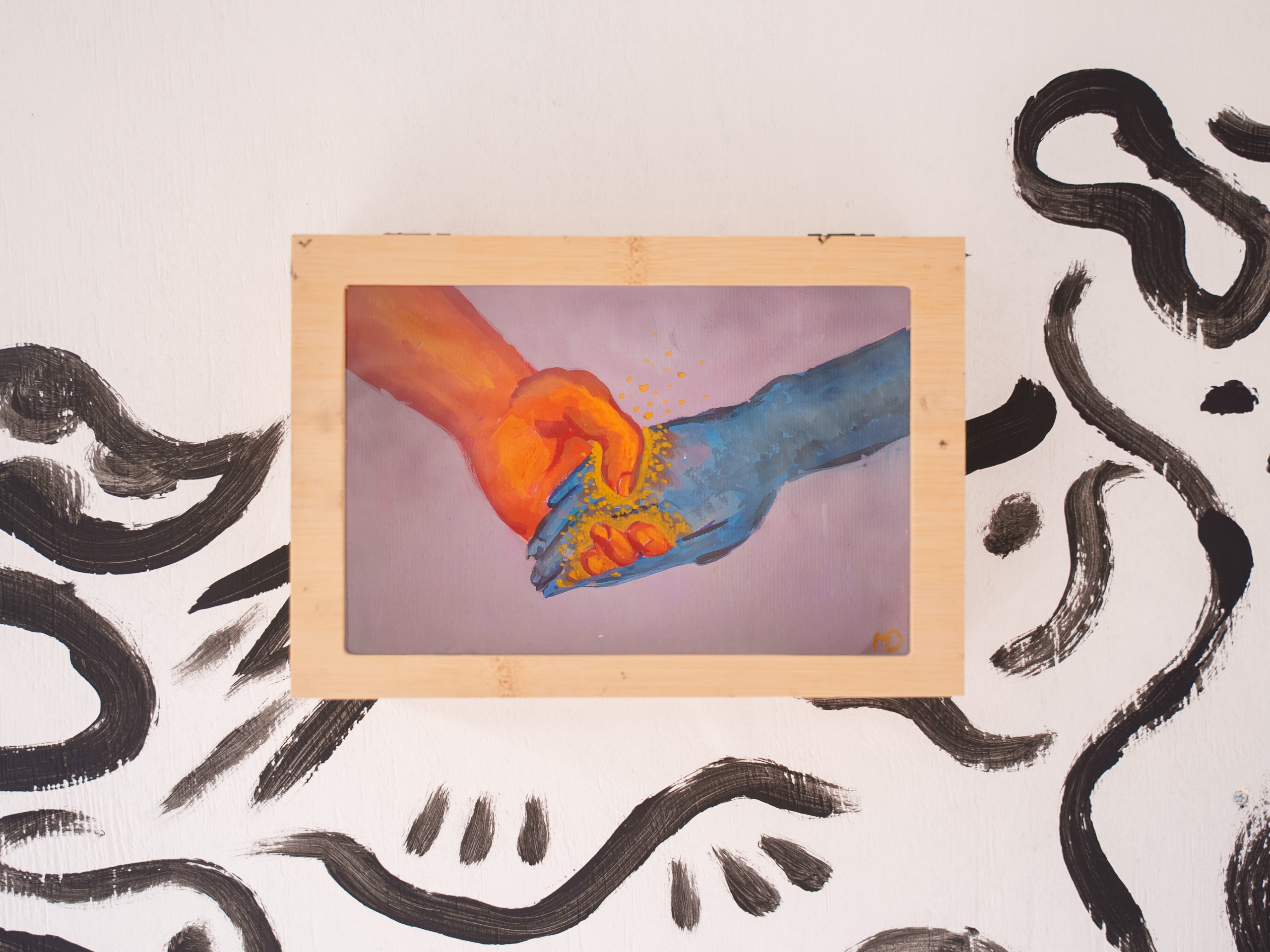
Stepping inside this container, you enter a bedroom. The bed, where so much time was spent, is now empty. The room contains reminders of a difficult period, but also sources of motivation to keep going. On the wall hang small boxes containing phrases and quotes. Students from different years have each chosen a phrase and translated it into a visual work, based on what they felt and imagined. On the back wall, three different texts can be found. These offer a glimpse into a diary. Themes such as support from those around you, a light in the dark and the feeling that your body is yours again are reflected here. The space invites you to reflect on this experience. Welcome to this bedroom.
EXTERIOR
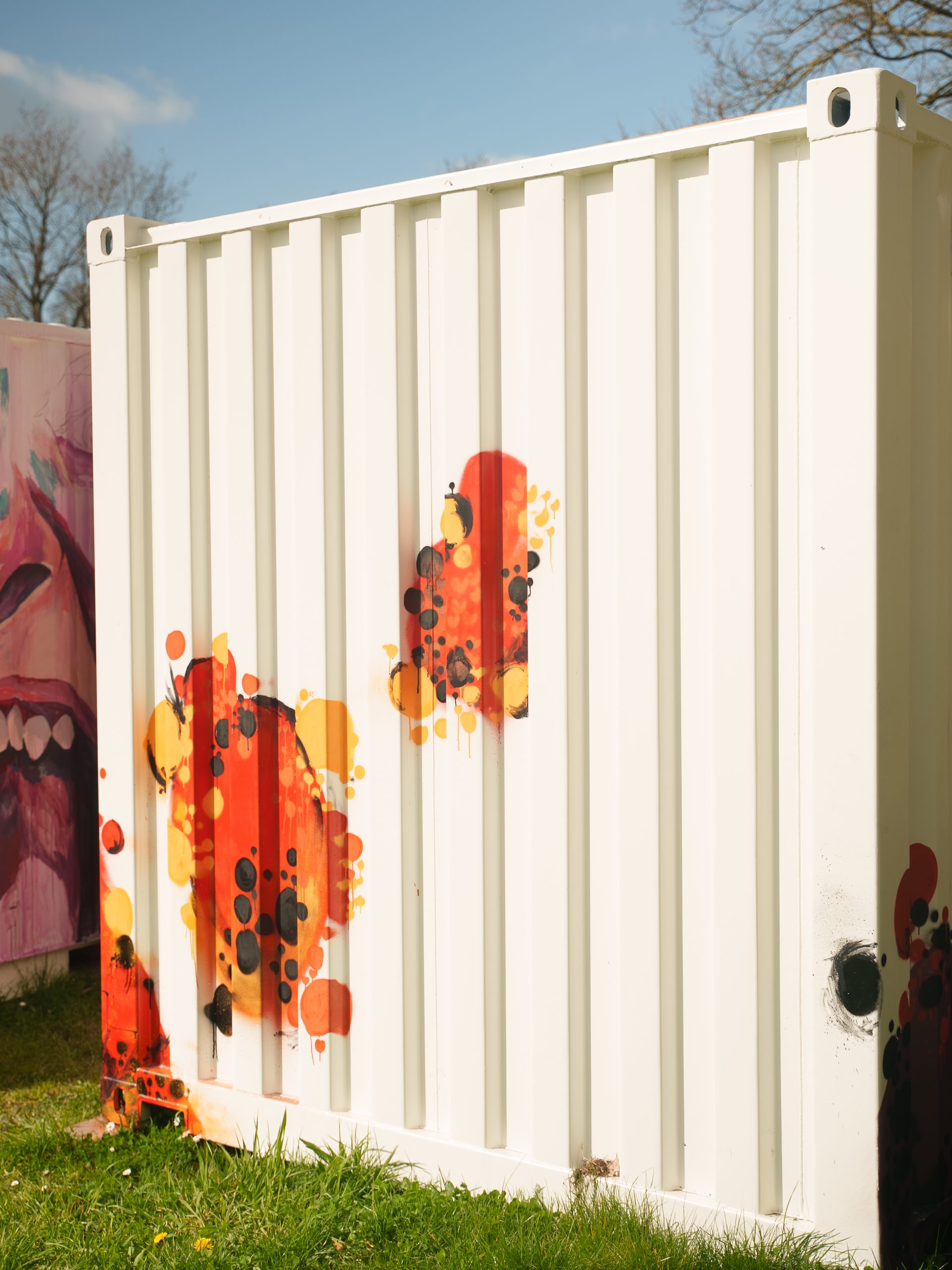
The large two-toned tree symbolizes growth, connection, and moving forward with life. Just like a tree that sprouts new leaves again, even after the harshest winters. The contrast of white against black symbolizes hope during and after a dark period. It shows that light and dark can coexist. The container is bright pink. This color draws attention and emphasizes that the subject should be visible and deserves more attention.
INTERVIEW
For this phase, students from the Academy of Pop Culture in Leeuwarden were interviewed about the creative process. They describe how their ideas came about, how they collaborated, and how they gave shape to themes such as recovery and connection.
Does this fit into the broader concept of the container?
Femme: “Yes, we all started from the idea of picking up your life again. One of our first ideas was a mattress: that represents getting out of bed and moving forward. But that was still too limited. So we hung little cabinets on the wall, among other things, each of which is a personal canvas. Now it all comes together beautifully.”
How did you divide up the work?
Femme: “It just happened that way. At first, we worked during class, then we continued outside of class. That’s when this group formed, with everyone having their own role. While we were creating, students kept coming to us with ideas. We’d discuss them and bring them to life. So there are nine cabinets with quotes: we made four of them, and the other five were made by others.” Meike: “A teacher said that the exterior, specifically, would be right up my alley. I mainly create highly visual fine art and already had some ideas. So I got to work on the tree.”
Where do the words on the boxes come from?
Jasmijn: “You read the quote and find the answer inside. The inspiration came from a museum I visited. After that, I started coming up with quotes in the middle of the night. Conversations with people who’ve been through similar experiences, as well as my own past, helped with that. Everyone who made a box chose a line. Femme: “At first, I mainly worked with other people’s experiences. When I went to choose a quote from Jasmijn’s list, I discovered one that I could relate to personally. So that’s the one I used.”
What do you want people to feel in ‘your’ container?
Jasmijn: “We’ve made the space feel like home, so everyone can feel welcome. The main message in the container is that we need to help each other. That you should dare to ask for help instead of bottling up your feelings. And that it’s okay to talk about it. We think it’s important for people to know this. That’s why I included the helplines you can turn to in my little box.
Jannes: “The work you see is truly ours. It reflects our personal perspectives and our own view of this phase.” Meike: “That’s why the collaboration among all the students was so valuable.” Femme: “In the end,
the whole school got involved, about twenty people in total. It was a real community.”
CREDITS
Academies en studenten
ArtEZ University of the Arts in Arnhem
Hannah Biesaart – Lieke van Dongeren – Camila Ferrabone Ledezma – Leticia Mendes Dias – Letecia Grotens – Anne Hovinga – Zus Houben – Murron Janzen – Ricardo Koppejan – Zoe Kyriakou – Lieze Marieze Tazelaar – Imko Verhoef – Geriëtte Willemsen
Academie Minerva in Groningen
Levy Melle Boorsma – Sophie Jassies – Flynn Reheis – Jeanine Jay Zuidhof
Academie voor Popcultuur in Leeuwarden
Meike Deen – Merel Gietema – Eli Kramer – Luca Posthuma – Jasmijn van Roessel – Aisha Stalman – Jannes Teusink – Thomas van Kester – Femme de Vries
Met dank aan alle betrokken studenten, docenten, alumni en ondersteuners die niet afzonderlijk zijn genoemd.
Curatorcommissie
Noaz Asbroek – David Bade – Anja Lok – Tom Theeuwen
Ervaringsdeskundigen
Nihâl Esma Altmış – Mitch Bakker – Jiske van den Broek-Pool – Anouk van Kampen – Juliët Niessen – Amber Poelman – Lisette Roffel – Merel Veldhuizen – Pascalle van Vliet
Mede mogelijk gemaakt door
Ars Donandi & W.J.O. de Vries fonds – FNO Zorg voor Kansen, programma Ruimte voor – Museum van de Geest – Nationale Nederlanden – Noaber Foundation – VSBfonds – Wellbe
Initiatief Mirjam Bekker-Stoop & Alexander Lethen (stichting Open mind & stichting MADE-Life) – Productie Juke Samwel – stichting Open mind – Productieondersteuning Jesse Schurink – stichting Open mind – Creatieve directie Mirjam Bekker-Stoop – stichting Open mind – Communicatie Guusje Veenhoven & Ismay Jongeling – stichting Open mind – Fondsenwerving Juke Samwel – stichting Open mind – Beeld sans studio amsterdam – Interview Joost Jager – Teksten Joost Jager & Juke Samwel & Jesse Schurink – Design Kellerman Bureau in Actie Bart Scheurs & Steven de Breet & Martin Stoop – Drukwerk Rodi Rotatiedruk en Drukkerij Damen
… en bovenal aan iedereen die diens verhaal heeft gedeeld, verbeeld of herkend in dit project.
Alle rechten voorbehouden
© 2026 stichting Open mind
© 2026 stichting MADE-Life
© 2026 Sansstudio